
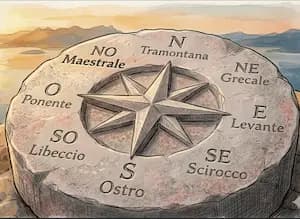
Understand the wind before you choose your beach
On the La Maddalena archipelago, wind is not a side note in the forecast — it is the architecture of the landscape. Every island has a windward and a leeward side, and learning to see them is worth more than any app. Locals do not check their phones before going out: they watch how boats lie in harbour and the cloud line over Corsica.
Mistral: the west-side wind
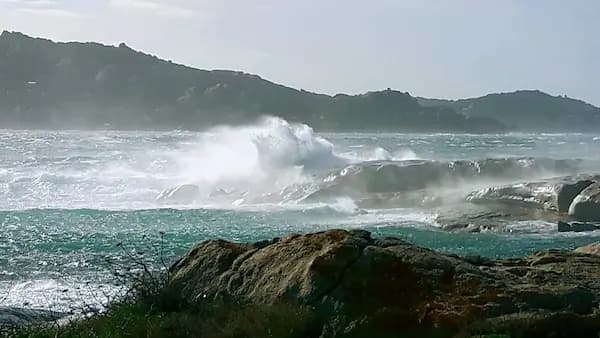
The Mistral blows from north-north-west and rules the summer. It brings dry air, quartz-clear skies and visibility all the way to Corsica. But it raises the open sea and makes north-west facing beaches a poor choice if you want flat water.
Where to go in the Mistral:
Porto Massimo, on La Maddalena’s north-east, is sheltered by the headland. It becomes a basin of still, transparent water: the Mistral adds water quality without adding chop. Cala Spalmatore, also on the north side of the main island, sits semi-sheltered. Water stays clear, the beach is never overcrowded, and morning light cuts the granite in unforgettable ways. On Spargi, Cala Corsara is wide, sheltered to the south-west by the island’s shape: in a strong Mistral it is one of the few beaches in the archipelago where you can swim without bother.
Scirocco: warmth and stillness
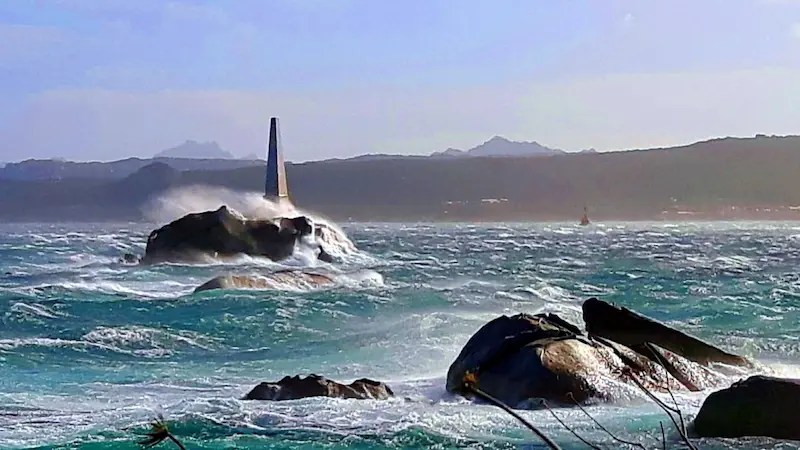
The Scirocco comes from the south-east, bringing humidity and heavier light. The sea builds on La Maddalena’s southern shore but calms on the northern one. It is the wind that separates tourists from regulars: those who know the archipelago already know where to turn.
Where to go in the Scirocco:
Bassa Trinità, on La Maddalena’s north shore, sits in the Scirocco’s shadow thanks to the island’s geometry — flat water, sandy bottom, good for children too. On Caprera, Cala Coticcio is reachable on foot or by dinghy and lies in a small north-facing bay: in a moderate Scirocco it is among the most sheltered spots in the whole archipelago. Cala Portese, also on Caprera’s north-east, offers shelter from the Scirocco and a blue-green colour with few equals in the Mediterranean.
Libeccio: the wind to manage
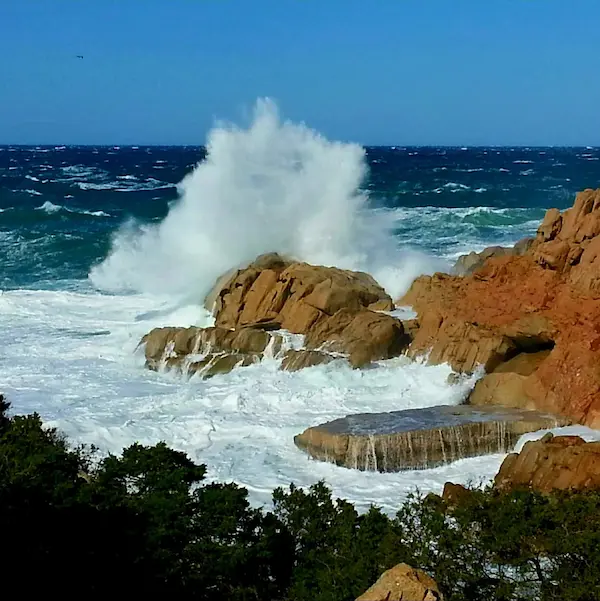
The Libeccio blows from west-south-west and is the most unpredictable. It raises sea on the north-west shore but opens windows of calm on the eastern side. It is not the wind for beach picnics — it is the wind for reading under a pergola and for the most colourful sunsets of the week.
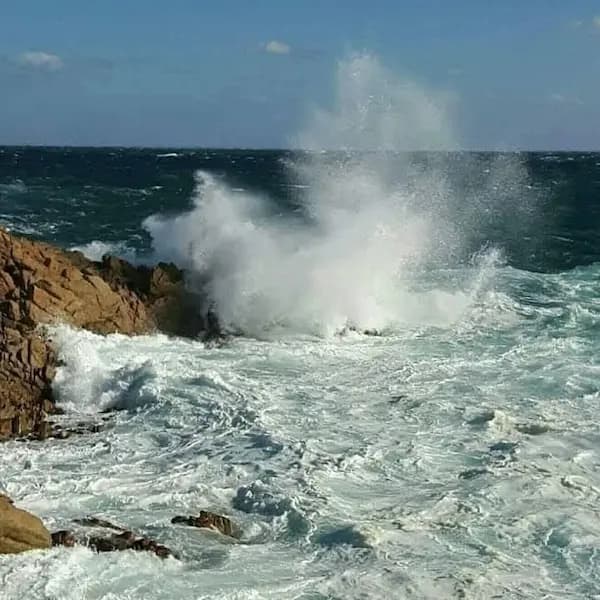
Thermal breeze: the daily rhythm
Every day, around eleven, a daytime breeze begins to climb from sea toward land. At sunset it often reverses into a cooler, softer land breeze. This cycle is the territory’s metronome: it explains why locals swim at seven in the morning, why fishermen return to port at noon, and why aperitivo is always outside.
Reading the wind without instruments
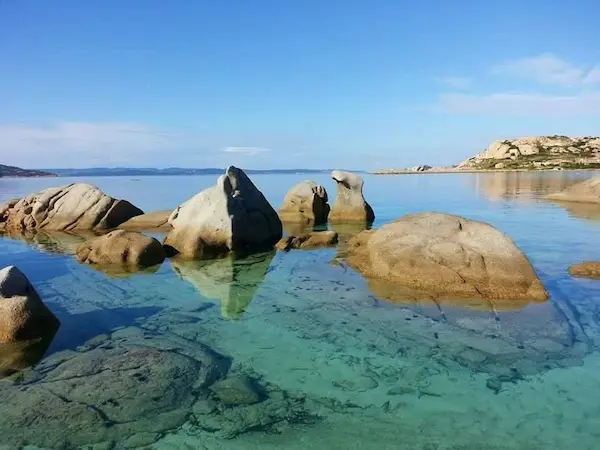
Archipelago water stays transparent even in a strong Mistral, as long as you pick the right side. Practical cue: if sailing boats’ masthead pennants in harbour point north-east, the sheltered side is east. If they point north-west, look west. It always works — no data connection required.